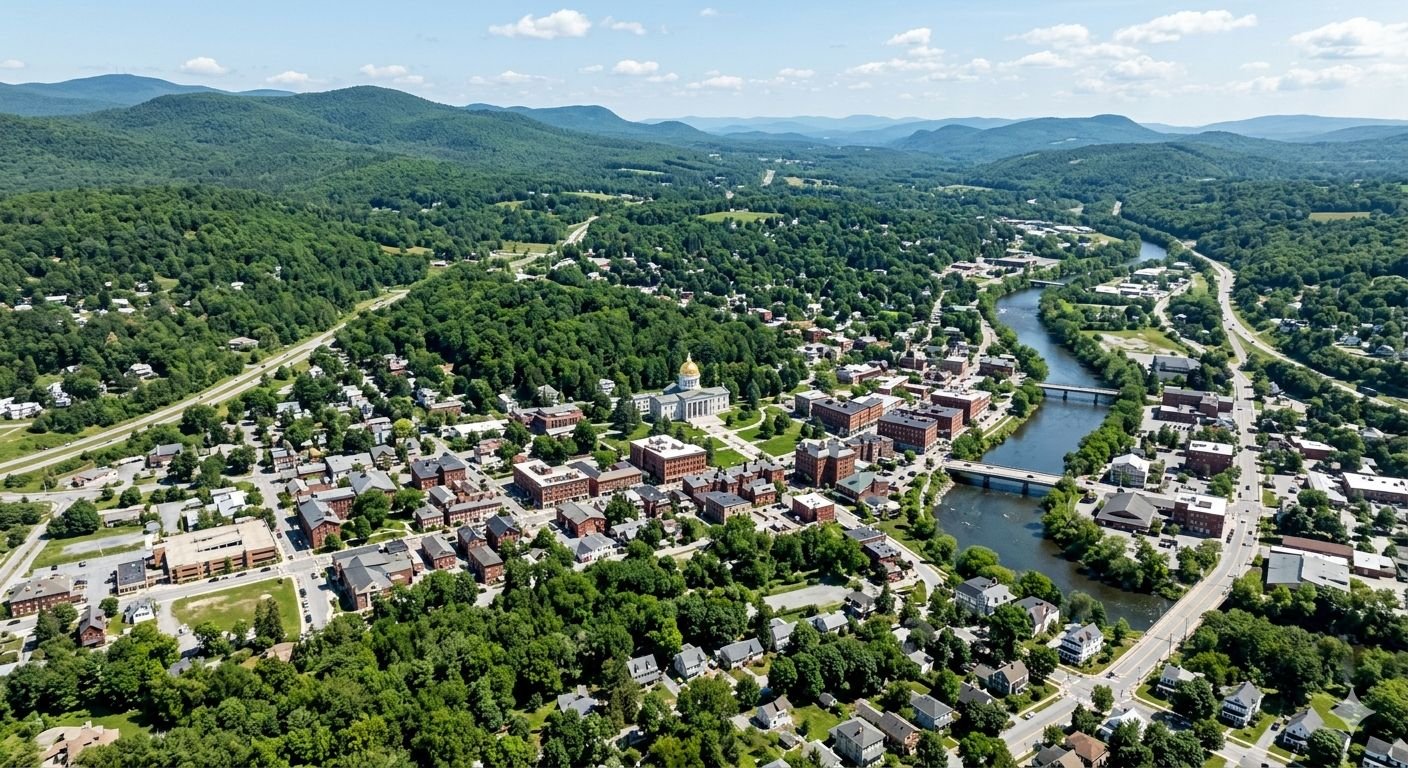
Vermont is one of the most enchanting destinations in North America. Tucked into the northeastern corner of the United States, this small but captivating state has earned a devoted following among travelers who return year after year, season after season. With its rolling green hills, covered wooden bridges, white-steepled churches, maple syrup farms, world-class ski resorts, and fiery autumn foliage, Vermont offers something rare in the modern world: an authentic sense of place. It is a state that has resisted the homogenizing forces of mass development and chain commerce, choosing instead to protect its landscapes, traditions, and independent character.
Vermont is the second least populated state in the country, but what it lacks in numbers it more than makes up for in beauty, culture, and charm. Whether you are an outdoor adventurer, a foodie, a history buff, a leaf-peeper, or someone who simply wants to sit on a farmhouse porch and watch the hills turn gold in the afternoon light, Vermont has a way of getting under your skin and staying there.
A BRIEF HISTORY
Vermont’s history is as independent-minded as the state itself. Before European settlement, the region was home to the Western Abenaki people, who lived in close relationship with the forests and waterways for thousands of years. French explorer Samuel de Champlain arrived in 1609 and gave his name to the magnificent lake that forms much of Vermont’s western border.
The colonial period was marked by fierce disputes between New Hampshire and New York over who had the right to grant land in the territory. Out of this conflict emerged the famous Green Mountain Boys, led by the legendary Ethan Allen. This militia of Vermont settlers resisted New York’s authority and famously captured Fort Ticonderoga from the British in 1775, one of the first American victories of the Revolutionary War.
Vermont declared itself an independent republic in 1777 and operated as such for fourteen years, with its own constitution, postal service, and currency. It was the first republic in the Western Hemisphere to explicitly prohibit adult slavery. In 1791, Vermont became the fourteenth state admitted to the Union, the first state to join after the original thirteen colonies.
This fiercely independent heritage still echoes through Vermont’s culture today, from its progressive politics to its preference for locally owned businesses and family farms over corporate development.
GEOGRAPHY AND LANDSCAPE
Vermont covers about 9,600 square miles, making it one of the smaller states in the nation, yet its geographical diversity is remarkable. The Green Mountains run like a spine down the center of the state, with peaks including Mount Mansfield, the highest point at 4,393 feet, and Camel’s Hump, one of Vermont’s most iconic and recognizable summits. These mountains give the state its name, derived from the French “Verts Monts,” meaning green mountains.
To the west, the Champlain Valley opens up into gentler, broader farmland along the shores of Lake Champlain, a massive freshwater lake stretching 120 miles and shared with New York and the Canadian province of Quebec. The valley’s fertile soils support some of the most productive farming in the state.
To the east, the Connecticut River forms Vermont’s entire border with New Hampshire, and the northeastern region known as the Northeast Kingdom is one of the most remote and unspoiled areas in all of New England, a land of deep forests, pristine lakes, and tiny villages that seem frozen in another century.
Vermont’s rivers, including the Winooski, the Lamoille, the White, and the Black, carve through valleys and provide habitat for trout, salmon, and other wildlife. The state has thousands of lakes and ponds, and its forests cover more than 75 percent of its land area.
GETTING THERE AND GETTING AROUND
Burlington International Airport is Vermont’s primary commercial airport, offering direct flights to major hubs including New York, Philadelphia, Washington D.C., and other northeastern cities. Several regional airports, including those in Rutland and Stowe, accommodate smaller aircraft and charter flights.
Amtrak serves Vermont with two routes. The Vermonter runs from Washington D.C. through New York City and up through Massachusetts and Connecticut into Vermont, with stops at Brattleboro, Bellows Falls, Windsor, White River Junction, Randolph, Montpelier/Barre, Waterbury, Essex Junction, and St. Albans. The Ethan Allen Express connects New York City with Rutland.
By car is perhaps the most popular and rewarding way to arrive and explore Vermont. Interstate 89 cuts diagonally from the New Hampshire border near White River Junction northwest to Burlington and up toward the Canadian border. Interstate 91 runs along the Connecticut River on the eastern side of the state. Route 7 is a beloved scenic drive along the western corridor, passing through charming towns like Manchester, Middlebury, and Burlington.
Once in Vermont, a car is essentially necessary for most travel, as public transit is limited outside of Burlington. The state’s back roads are part of its charm, and many of the best destinations, farms, inns, and views require venturing off the main highways onto winding country lanes.
WHEN TO VISIT
Vermont is a four-season destination, and every time of year offers its own distinct pleasures.
Spring, from roughly March through May, is known locally as mud season, and that name is apt. The snowmelt turns dirt roads into rivers of mud, and the landscape can look brown and tired. However, late spring brings sugar season, when maple sap runs and sugar houses fire up their evaporators to make syrup. The hillsides erupt in wildflowers and the first green haze of new leaves appears on the trees. Sugar season typically runs from mid-February through mid-April, depending on temperatures.
Summer, from June through August, transforms Vermont into a lush paradise. The hills are deeply, richly green. Farmers markets overflow with fresh produce. Swimming holes and lakes beckon. Hiking trails are at their most accessible. Outdoor music festivals, art shows, and agricultural fairs fill the calendar. The weather is generally mild and pleasant, with daytime temperatures typically ranging from the high 60s to the mid-80s Fahrenheit, though it can occasionally get warmer. Summer is a wonderful but busy time to visit, and lodging in popular areas books up quickly.
Autumn, from mid-September through late October, is Vermont’s most celebrated season. The foliage display is world-famous, as the sugar maple, birch, beech, and ash trees explode into a symphony of red, orange, gold, and burgundy that has to be seen to be believed. Foliage season is Vermont’s busiest tourist period, and for good reason. Peak color typically arrives in the northern and higher elevations during the first two weeks of October and works its way south and downhill through the rest of the month. Plan well in advance, because inns and hotels fill months ahead.
Winter, from November through March, draws skiers, snowboarders, snowshoers, ice skaters, and anyone who appreciates the magic of a snowy Vermont village. The ski resorts are world-class, and the state’s covered bridges and historic downtowns look impossibly picturesque draped in white. Vermont winters are cold and snowy by national standards, with temperatures often dipping well below freezing, but the infrastructure for winter recreation and the warmth of the culture make it a genuinely wonderful season to visit.
SKI RESORTS AND WINTER RECREATION
Vermont is the ski capital of the eastern United States, home to more than twenty ski areas ranging from small, family-oriented hills to major destination resorts. A few stand out as must-visit destinations for any serious winter traveler.
Stowe Mountain Resort is perhaps the most famous and iconic ski destination in Vermont, and indeed in all of New England. Situated on the slopes of Mount Mansfield, Vermont’s highest peak, Stowe offers 485 skiable acres, 116 trails, and a vertical drop of 2,360 feet. The resort has a classic, European-alpine feel, and the town of Stowe that surrounds it is one of the most charming and sophisticated in the state, with excellent restaurants, boutique shops, a renowned arts scene, and luxurious lodging options.
Killington Resort, known as “the Beast of the East,” is the largest ski resort in the eastern United States by any measure. With six interconnected mountain peaks, more than 1,500 acres of terrain, 155 trails, and one of the longest ski seasons in the country (often running from October to May), Killington is a powerhouse. It attracts serious skiers and a lively après-ski crowd and has recently been the site of World Cup ski racing events.
Mad River Glen is something of a legend among serious skiers. It is one of only two ski areas in the country that is owned by a cooperative of skiers, and it has stubbornly maintained its old-school character. The resort famously bans snowboards and relies on single-chair lifts and ungroomed terrain. Its motto is “ski it if you can,” and the steep, bumpy, tree-filled runs live up to that challenge.
Sugarbush Resort in the Mad River Valley is another beloved destination, with two mountain complexes offering diverse terrain, beautiful scenery, and a welcoming community feel. Okemo, Smugglers’ Notch, Jay Peak, and Mount Snow are other notable Vermont ski areas, each with its own personality and strengths.
Beyond skiing and snowboarding, Vermont offers snowshoeing, cross-country skiing and skate skiing on extensive groomed trail networks, ice fishing on frozen lakes, snowmobiling on hundreds of miles of designated trails, and the simple pleasure of exploring snow-covered villages on foot.
OUTDOOR ACTIVITIES IN WARMER SEASONS
When the snow melts, Vermont becomes an outdoor playground of a different kind. The hiking opportunities alone could fill a lifetime of weekends.
The Long Trail is Vermont’s crown jewel for hikers. Completed in 1931, it is the oldest long-distance hiking trail in the United States, running 273 miles from the Massachusetts border in the south all the way to the Canadian border in the north, traversing the spine of the Green Mountains the entire way. The trail passes over more than a dozen peaks above 4,000 feet, through pristine wilderness, and across some of the most magnificent landscapes in New England. Day hikes and multi-day backpacking trips are both popular options.
The Appalachian Trail shares a path with the Long Trail for about 100 miles in the southern portion of Vermont before branching off eastward into New Hampshire.
Mountain biking has become enormously popular in Vermont, with the Kingdom Trails network in East Burke considered one of the best mountain biking destinations in the entire country. The trails wind through forests and farmland with a variety of difficulty levels and an astonishing total distance of over 100 miles.
Cycling on the state’s back roads is a beloved pastime, and Vermont’s rolling terrain makes it challenging in the best possible way. The Lamoille Valley Rail Trail, stretching 93 miles across northern Vermont, is a converted rail trail that offers cycling, walking, and snowmobiling through some of the state’s most beautiful countryside.
Kayaking and canoeing are wonderful ways to experience Vermont’s waterways. Lake Champlain offers open-water paddling with spectacular views of the Green Mountains to the east and the Adirondacks to the west. The Connecticut River, the upper reaches of the Winooski, and countless ponds and smaller lakes offer calmer, more intimate paddling experiences.
Fishing is a serious pursuit in Vermont, with the state’s cold, clear rivers and lakes providing excellent habitat for brook, brown, and rainbow trout, as well as bass, walleye, and other species. Fly fishing on rivers like the Battenkill, which runs through the Manchester area, is world-renowned.
Rock climbing, swimming in natural holes and rivers, wildlife watching, horseback riding, golf on courses that take full advantage of the mountain scenery, and simply walking through covered bridges and along village greens round out the outdoor offerings.
FOOD AND DRINK
Vermont has developed a food culture that punches well above its weight for a state of its size. The emphasis on local, seasonal, artisanal, and farm-to-table food was part of Vermont’s identity long before those terms became fashionable buzzwords.
Maple syrup is perhaps Vermont’s most iconic product, and Vermont produces more maple syrup than any other state in the country, accounting for roughly half of the national supply. Vermont maple syrup is graded into four flavor categories: Golden with Delicate Taste, Amber with Rich Taste, Dark with Robust Taste, and Very Dark with Strong Taste. Sugar houses throughout the state welcome visitors during sugaring season, and many farms offer tours of their operations. Real Vermont maple syrup poured over fresh pancakes on a cold morning is one of the simple but profound pleasures of visiting the state.
Vermont cheese has achieved national and international acclaim. The state has more artisan cheese makers per capita than any other state, producing everything from fresh chèvre to aged cheddars to bloomy rind cheeses that rival anything from Europe. Cabot Creamery, a farmer-owned cooperative, is perhaps the most well-known producer, famous for its sharp and extra-sharp cheddars. But dozens of smaller creameries and farms produce extraordinary cheeses under names like Jasper Hill Farm, Shelburne Farms, Vermont Creamery, and many others.
Vermont’s craft beer scene is extraordinary and has been at the forefront of the American craft brewing renaissance. The state is home to well over 60 breweries for its population, producing some of the most sought-after beers in the country. The Alchemist, a small brewery in Stowe, is the maker of Heady Topper, a double IPA that has been consistently rated among the best beers in the world and was instrumental in popularizing the now hugely influential “hazy IPA” or “New England IPA” style. Hill Farmstead Brewery in Greensboro Bend has also been rated repeatedly as one of the best breweries on the planet. Long Trail, Magic Hat, Switchback, and Lawson’s Finest Liquids are other beloved Vermont breweries.
Vermont also has a growing craft spirits scene, with distilleries producing locally sourced whiskeys, vodkas, gins, and aquavits. Vermont Hard Cider, made from the state’s abundant apple orchards, is another growing category.
The farm-to-table dining scene in Vermont is robust and genuine. Restaurants in Burlington, Stowe, Woodstock, Manchester, Middlebury, and other towns regularly feature menus built around ingredients from nearby farms, including grass-fed beef, heritage-breed pork, pasture-raised poultry, fresh vegetables, and locally foraged mushrooms and wild greens. Burlington in particular has a dining scene that would be impressive in a city ten times its size.
Other Vermont food traditions and products worth seeking out include apple cider and cider donuts from farm stands in the fall, fresh-pressed apple juice, local honey, farmstead eggs, Ben and Jerry’s ice cream (founded in Burlington and still manufacturing in Waterbury), and the uniquely Vermont snack known as “creemees,” a soft-serve ice cream made with a higher butterfat content than typical soft serve and often flavored with maple.
TOWNS AND CITIES WORTH EXPLORING
Burlington is Vermont’s largest city, with a population of about 45,000, and it is a genuinely vibrant and livable place. Situated on a hillside sloping down to Lake Champlain, with the Adirondack Mountains visible across the water in New York State, Burlington has exceptional natural beauty as its backdrop. The Church Street Marketplace is a pedestrian shopping and dining district at the heart of downtown that is lively year-round. The University of Vermont brings a youthful energy and cultural vitality to the city. The waterfront has been beautifully developed with parks, a bike path, marinas, and venues for outdoor events. Burlington’s restaurant, bar, music, and arts scenes are all exceptional by any standard.
Montpelier is the state capital and the smallest state capital in the United States by population, with fewer than 8,000 residents. What it lacks in size it makes up for in charm and character. The gold-domed State House is a beautiful landmark, and the compact downtown is full of independent bookstores, cafes, galleries, and restaurants. The culinary school New England Culinary Institute was based here for many years and helped foster a remarkable concentration of excellent food culture.
Stowe is one of Vermont’s premier resort towns, built around the base of Mount Mansfield. Even in the summer and fall, when skiing is not the draw, Stowe is a beautiful and sophisticated destination with excellent restaurants, galleries, spas, and outdoor activities. The Stowe Recreation Path is a beloved multi-use trail that runs through the village and along the West Branch River.
Woodstock is often called the prettiest small town in America, and it is hard to argue with that assessment. Its immaculate village green, surrounded by Federal and Georgian architecture, its covered bridge, its upscale shops and inns, and the looming presence of Mount Tom all combine to create a tableau of New England perfection. The Billings Farm and Museum on the edge of town is a working farm and museum of Vermont’s agricultural heritage that is well worth a visit.
Manchester has been a resort destination since the 19th century, when wealthy vacationers came to escape the summer heat of New York and Boston. Today it is known for upscale outlet shopping, the Orvis flagship store and fly-fishing school, the historic Equinox resort, and easy access to excellent hiking and outdoor recreation in the surrounding mountains.
Brattleboro is a funky, artsy, progressive town in the southeastern corner of Vermont where the Connecticut River and Whetstone Brook converge. It has a lively arts scene, excellent independent restaurants and cafes, a thriving farmers market, and a character that is distinctly its own. The town has a strong literary tradition and a history of welcoming artists and free thinkers.
Middlebury is a gracious college town in the Champlain Valley, home to Middlebury College and a charming downtown of limestone and marble buildings, independent shops, galleries, and restaurants. It is a lovely base for exploring the Champlain Valley and the western slopes of the Green Mountains.
The Northeast Kingdom, encompassing Essex, Orleans, and Caledonia counties in the northeastern corner of the state, is less visited than other parts of Vermont but deeply rewarding for those who seek it out. The towns of St. Johnsbury, Lyndonville, Newport, and Burke are gateways to an area of extraordinary natural beauty, with pristine lakes, dense forests, and a rugged, unspoiled character. St. Johnsbury has the remarkable Athenaeum, a Victorian-era library and art gallery of unusual quality for a small town, and the fascinating Fairbanks Museum and Planetarium.
COVERED BRIDGES
Vermont has more than 100 historic covered wooden bridges, more per square mile than any other state. These beloved structures, built primarily in the 19th century, were covered not for romantic reasons but for practical ones: the roof protected the structural timbers from weather, greatly extending the bridge’s lifespan. Today they are among the state’s most photographed and cherished landmarks.
The town of Montgomery in the Northeast Kingdom has seven covered bridges within its boundaries, more than any other town in the state. The Quechee Gorge area, the Mad River Valley, and the area around Middlebury are also rich in covered bridges. Many Vermont villages have organized self-guided covered bridge tours that make for a wonderful way to spend an afternoon exploring the countryside.
ARTS AND CULTURE
Vermont has a cultural life that far exceeds what one might expect from its small population. This is partly a reflection of the many artists, writers, musicians, and intellectuals who have chosen to make their homes here, drawn by the landscape, the quality of life, and the creative community.
The Shelburne Museum, just south of Burlington, is one of the great folk art and Americana museums in the United States. Its 45 acres contain 39 buildings, including authentic historic structures relocated from across New England, and house an extraordinary collection of American folk art, paintings, decorative arts, and objects of everyday life. A highlight is the Ticonderoga, a restored 19th-century steamship that once sailed on Lake Champlain.
The Vermont Arts Council and numerous local arts organizations support a thriving scene of galleries, studios, theater companies, dance troupes, and music ensembles throughout the state. Burlington’s Flynn Center for the Performing Arts is the state’s premier venue for touring theatrical, musical, and dance performances.
The Bread Loaf Writers’ Conference, held each August at a campus in Ripton owned by Middlebury College, is one of the oldest and most prestigious writers’ conferences in the country, dating back to 1926. Robert Frost had a long association with Middlebury College and the surrounding area, and his former home at the Homer Noble Farm in Ripton is preserved as a literary landmark.
Music fills Vermont’s summer, with outdoor concerts, festivals, and performances happening across the state. The Vermont Jazz Center in Brattleboro, the Champlain Valley Folk Festival in Burlington, the Discover Jazz Festival in Burlington, and the Green Mountain Bluegrass and Roots Festival are among the many annual music events that draw performers and audiences from across the region and the country.
FARMS AND AGRICULTURAL TOURISM
Vermont is, at its heart, a farming state, and agricultural tourism, or agritourism, is a growing and deeply rewarding way to experience what makes Vermont Vermont. The working landscape of barns, silos, pastures, and orchards is as much a part of the scenery as the mountains and forests.
Many Vermont farms welcome visitors for tours, stays, and seasonal experiences. You can tour dairy farms and learn how farmstead cheese is made, visit sheep farms during lambing season, pick your own apples and pumpkins in the fall, cut your own Christmas tree in December, and visit working sugar houses during the late winter sugaring season.
The NOFA Vermont (Northeast Organic Farming Association) Farm & Food Guide lists dozens of farms open to visitors, and the Vermont Fresh Network connects visitors with farm dinners, farm stays, and opportunities to purchase directly from producers.
Farm stays, where guests stay on working farms and participate in or observe farm life, are a wonderful option for families and anyone wanting a deeper connection to Vermont’s agricultural heritage.
FAIRS AND FESTIVALS
Vermont’s calendar is packed with agricultural fairs, craft festivals, cultural events, and seasonal celebrations that provide wonderful opportunities to connect with the state’s communities and traditions.
The Vermont State Fair, held in Rutland each September, is one of the oldest state fairs in the country, dating to 1846. It features livestock shows, agricultural exhibits, midway rides, live music, demolition derbies, and all the classic pleasures of a traditional American state fair.
The Stowe Foliage Arts Festival, held in early October, is one of the premier outdoor arts and crafts shows in the region, featuring the work of hundreds of juried artists against the backdrop of peak fall foliage.
The Vermont Brewers Festival in Burlington, held each July, celebrates the state’s extraordinary craft brewing scene with tastings from dozens of breweries. The Vermont Cheesemakers Festival showcases the state’s artisan cheese producers.
Town meeting day, held on the first Tuesday of March, is a uniquely Vermont tradition in which voters gather in town halls across the state to vote on local budgets, elect local officials, and debate community matters in a form of direct democracy that dates back to the earliest days of the republic. Attending a town meeting, if the timing works out, offers a rare glimpse into one of America’s oldest democratic traditions still practiced in its original form.
WHERE TO STAY
Vermont offers a remarkable range of accommodations suited to every taste and budget.
Country inns and bed and breakfasts are the quintessential Vermont lodging experience. These range from simple, cozy guestrooms in 19th-century farmhouses to luxurious retreats with fine dining, spa services, and impeccably decorated rooms. The Woodstock Inn and Resort, the Equinox in Manchester, the Twin Farms in Barnard, and the Pitcher Inn in Warren are among the most celebrated and luxurious options.
Ski resort lodging, from slope-side condominiums to full-service hotels, is abundant in areas like Stowe, Killington, and Sugarbush. These range from basic and affordable to extravagant.
Vacation rental homes and cabins are popular throughout the state, particularly for families and groups who want the convenience of a kitchen and living space. Vermont’s rental inventory includes everything from tiny lakeside camps to sprawling farmhouses with mountain views.
Camping is a wonderful way to experience Vermont’s natural beauty. The state operates a network of campgrounds in its state parks, many of them situated in beautiful forest settings near ponds, rivers, or mountain trailheads. Green Mountain National Forest also offers backcountry camping and established campgrounds. Glamping options, including yurts, treehouses, and luxury tents, have also proliferated in recent years for those who want the outdoor experience with a bit more comfort.
PRACTICAL TIPS FOR VISITORS
Vermont operates on Eastern Time. The state sales tax is 6 percent, with an additional 9 percent meals and rooms tax on restaurant meals and lodging.
Cell phone coverage is good in towns and along major highways but can be spotty or nonexistent in rural areas, particularly in the Northeast Kingdom and higher elevations. This is part of Vermont’s charm, but plan accordingly.
Cash is still useful in Vermont, as some small farms, sugar houses, and farm stands operate on a cash-only basis. Many farmers markets have card readers now, but it is wise to have some on hand.
Vermont’s back roads are beautiful but can be narrow, winding, and unpaved. A GPS is helpful, but physical maps are also a good backup, and it is worth embracing the idea that getting a little lost on a Vermont back road is rarely a bad thing.
Wildlife is abundant. Deer are common everywhere, and moose are frequently seen, particularly in the Northeast Kingdom and along wetland edges in early morning and evening. Bear sightings are not unusual. Drive carefully at dawn and dusk, particularly in wooded areas and near wetlands.
Vermonters are known for being friendly but reserved with strangers at first. The stereotype of the laconic, dry-humored Vermonter is not entirely without basis. Politeness and patience are rewarded, and genuine connections with local people are one of the great pleasures of spending time in the state.
Tipping customs follow standard American norms, with 18 to 20 percent being standard at restaurants and tip jars being common at coffee shops, farm stands, and other casual establishments.
Vermont is a strongly pro-environment state, and visitors are expected to practice Leave No Trace principles in natural areas, pack out their trash, stay on marked trails, and respect private property. Many of the state’s most beloved natural areas are on private land that is voluntarily open to the public; treating that land with care is essential to keeping it accessible.
CONCLUSION
Vermont is a place that rewards those who pay attention. It is a state of subtleties, where the pleasure is often found not in grand spectacles but in quiet moments: the smell of wood smoke from a farmhouse chimney on a cold morning, the sound of a brook running under a covered bridge, the particular quality of autumn light on a hillside of maples at peak color, the taste of a fresh cider donut from a farm stand in October, the view from a mountain summit after a long climb.
It is also a state of genuine substance, with a rich history, a strong and resilient culture, extraordinary natural beauty, excellent food and drink, world-class outdoor recreation, and a quality of life that draws people back again and again, and often persuades them to stay.
Whatever brings you to Vermont, whether it is the skiing, the foliage, the cheese, the beer, the hiking, the history, the quiet, or simply the need to be somewhere that feels real and rooted and unhurried, the Green Mountain State is likely to give you more than you expected and leave you planning your return before you have even made it home.
Leave a Reply